
Annual Report for the 2025/26 Financial Year now available
The 2025/26 Annual Report is now available (PDF, 3.55 MB).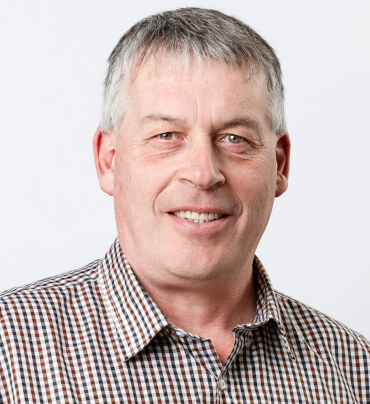 Terry Nicholas, Chairperson, Reimagining Mataura.
Read Terry Nicholas’ Chair’s Report below:
As Chair of Reimagining Mataura, I am pleased to present this Annual Report and reflect on another year of progress toward our shared vision for Te Au-Nui Pihapiha-Kanakana, the Mataura River.
Reimagining Mataura was established through a partnership between Hokonui Rūnanga, Awarua Rūnanga, Waihopai Rūnanga, Ōraka/Aparima Rūnanga, Te Rūnanga o Ngāi Tahu, Fonterra, and Toitū Te Whenua | LINZ to explore a new future for the Mataura catchment by combining catchment design methodologies with mātauranga Māori. Our vision is to build cultural, environmental, and economic resilience while restoring the health and mauri of one of Murihiku’s most significant waterways.
The need for this work has never been clearer. Throughout this year, we have listened carefully to the voices of whānau whose lives and identities are deeply connected to the Mataura River. Their stories describe an awa that was once central to swimming, camping, whitebaiting, gathering tuna, kanakana, watercress, and other mahinga kai, while also serving as a place for learning, connection, and the passing of knowledge between generations. At the same time, those same voices have expressed concern about declining water quality, the loss of safe recreation opportunities, degradation of tributaries, flood risks, loss of habitat, and the diminishing health of traditional food sources. Despite these concerns, whānau share a strong belief that restoration is both necessary and achievable.
Responding to these aspirations has been a defining focus of our work this year through the development of the Reimagining Mataura 100-Year Strategy. Guided by facilitator Katerina Kupenga, the strategy was developed through a series of wānanga involving mana whenua, whānau, project partners, and community representatives. The process explored the historic significance of the river, the challenges facing the catchment today, and the opportunities available to future generations. The resulting strategy provides an intergenerational framework focused on protecting taonga tuku iho, strengthening cultural identity, restoring ecological health, and embedding sustainable and climate-resilient practices across the catchment. Adetailed 12-month action plan has also been adopted to move the strategy from aspiration to implementation.
A major achievement this year has been building the knowledge base required to support informed decision-making. Through our partnership with Takiwā Analytics, Reimagining Mataura has begun bringing together extensive environmental, cultural, and land-use information that has historically been scattered across numerous agencies and databases. For the first time, information on catchment boundaries, river networks, biodiversity records, fish species, floodplains, land tenure, and historical imagery is being assembled into a single platform governed by rūnanga. This initiative not only strengthens our understanding of the catchment as a connected living system but also supports Māori data sovereignty and ensures that future decisions can be informed by both science and mātauranga Māori.
Practical restoration continues to be equally important. The Glen Lapa Road Riparian Planting Project, developed in partnership with the Wilkins whānau, has progressed significantly during the year. The project will see approximately 1,075 metres of tributary margins restored through the establishment of more than 9,000 eco-sourced native plants. This initiative will improve water quality, enhance biodiversity, stabilise stream banks, and contribute to the long-term restoration of habitats throughout the catchment while demonstrating the positive outcomes that can be achieved through collaboration with landowners.
Our support for the Edendale Aquifer Group has also continued to deliver positive results. Through a combination of community leadership, scientific investigation, farm system analysis, and wetland development, the group has strengthened understanding of nutrient movement within the catchment while identifying practical solutions to improve water quality. The establishment of pilot wetlands, nutrient modelling tools, farm case studies, and extensive community engagement activities has created a strong foundation for future action. Together, these initiatives reflect a shift from understanding challenges to implementing solutions. They also align closely with the priorities identified by whānau, including restoring wetlands, improving water quality, enhancing mahinga kai opportunities, strengthening biodiversity, reducing flood risks, reconnecting communities with the river, and ensuring future generations can safely enjoy and learn from a healthy awa.
On behalf of the Steering Group, I extend my sincere thanks to Te Rūnanga o Ngai Tāhu, our rūnanga partners, whānau, landowners, community organisations, scientists, funders, contractors, and volunteers who continue to contribute their time, expertise, and passion to this kaupapa. The restoration of Te Au-Nui Pihapiha-Kanakana will take generations, but the progress made this year gives me confidence that we are laying the foundations for lasting change.
Posted: 12 October 2026

